
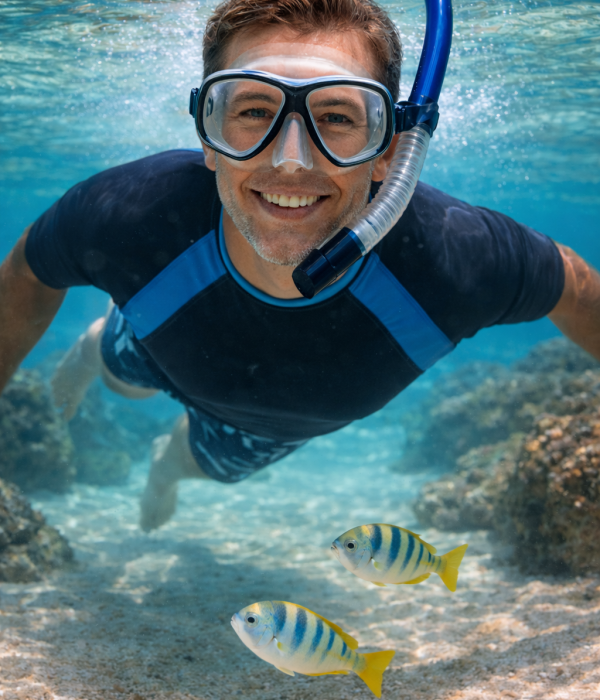
Although we have been a waterfront property for some time, believe it or not, we had never actually tried snorkelling here ourselves! Like many, we assumed proper snorkelling could only be done far out at sea, after a long boat trip.
It was only after some persistent guests encouraged us to put on their gear that we decided to give it a try. To our surprise, it was wonderful, we could see colourful marine life right on our doorstep!
We are by no means experts, having only snorkelled a few times since, but other guests have also told us how much they enjoyed snorkelling in our bay. Inspired by these experiences, we decided to write these articles to share what we’ve learned along the way.
If you are snorkelling for the first time, choosing calm, shallow water makes all the difference. These tips will help you feel confident, stay safe, and enjoy your first snorkelling experiences.
This article focuses on practical advice for beginners, both generally and specifically for our waterfront location, should you decide to stay with us and explore the ocean.
The most important factor for first-time snorkellers is the location and environment. It is always a good idea not to snorkel alone, but with another responsible adult, preferably someone with more experience than you. Both snorkellers should be alert, and not under the influence of alcohol or any other substances that may impair focus.
When selecting where to snorkel, several factors should be considered. Chief among these are the sea conditions. Even in areas that are generally calm, strong tides or choppy waters on your chosen day can make snorkelling unsafe. If conditions are unfavourable, it’s best to either find an alternative location or postpone your activity until the weather improves.
Once you and your partner are ready and the conditions are suitable, it’s time to decide exactly where to enter the water:
Protected bays provide extra safety. Our bay is generally sheltered from strong waves, currents, and winds, creating calm conditions that are easier to navigate. The water in front of our property is shallow, typically between 1–2 metres (3–6.5 feet) deep, extending roughly 35 feet from the shoreline. Most adults can comfortably stand here, which gives added confidence for first-time snorkellers and those who are not strong swimmers
Wherever you choose to snorkel, you should have sufficient mobility and/or support to safely enter the water, move to your chosen snorkelling area, and return to shore. If you are snorkelling with us, this includes making your way to the ocean front via our multi-levelled terraces and entering the water using the steps and rocks, which can be slippery. Good water shoes are strongly recommended
In front of our property, most snorkellers do not feel the need to use flotation aids. We advise guests to stay in the shallow areas where they can comfortably stand, with water no higher than low chest level. Following this guidance means that even less confident swimmers can snorkel safely. However, some guests prefer the added reassurance of a flotation aid, and that is entirely fine.
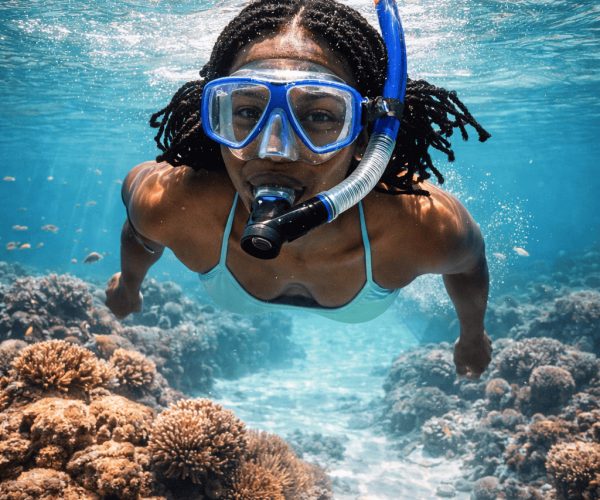
Even in shallow water, correctly fitting equipment is crucial. Simple, well-fitted gear should be enough for our bay.
* Mask: Ensure a tight seal to prevent leaks.
* Snorkel: Practice breathing through it before entering the water.
* Fins (optional): Useful but not essential for calm, shallow water. Most of the snorkellers in our bay don’t use them.
* Water shoes: Protect feet from slippery rocks and uneven surfaces. Some of our swimmers use them to get into the water and then take them off to swim or snorkel. Others snorkel with them on. Horses for courses.
* Safety equipment: Consider a flotation aid if you are unsure of your comfort level.
* Sit or kneel in shallow water and breathe slowly through your snorkel.
* Keep your head above water until you feel comfortable.
* Focus on calm, steady breaths to avoid panic or hyperventilation.
Confidence with breathing is the single biggest factor in enjoying your first snorkelling experience.
* Walk carefully over any terraces, steps, or rocks leading to the water.
* Be aware that surfaces can be slippery.
* Use slow, deliberate movements when entering the shallow bay.
* Keep an eye on your surroundings to avoid accidental contact with rocks or marine life.
Good entry and exit habits protect both you and the environment.
* Start by standing or floating and looking around slowly.
* Avoid sudden movements or kicking excessively as it can scare fish and stir sediment.
* Small reef fish, are often visible close to shore in calm water.
* Don’t venture too far from shore (we would suggest no more than say 30feet out,or into deeper water.
* Take breaks if you feel tired or anxious.
* Always keep your exit point in sight.
* Snorkelling should be enjoyable, not a challenge to endurance.
Conserving energy and staying within your comfort zone makes the experience safe and memorable.
First-time snorkelling is about exploration and observation. Calm, shallow water allows beginners to relax, build confidence, and gradually extend their comfort zone. Focus on enjoying the underwater scenery rather than covering distance or reaching a particular skill level.
As our bay is often calm, when snorkelling in its shallow water it provides a safe and enjoyable environment for inexperienced snorkellers. Proper preparation, careful entry, and mindful observation of marine life will help you gain confidence and make your snorkelling experience a positive one.
Remember, repeated practice in protected bays, such as our waterfront builds the skills and confidence needed to be able to explore more adventurous snorkelling locations in the future.