
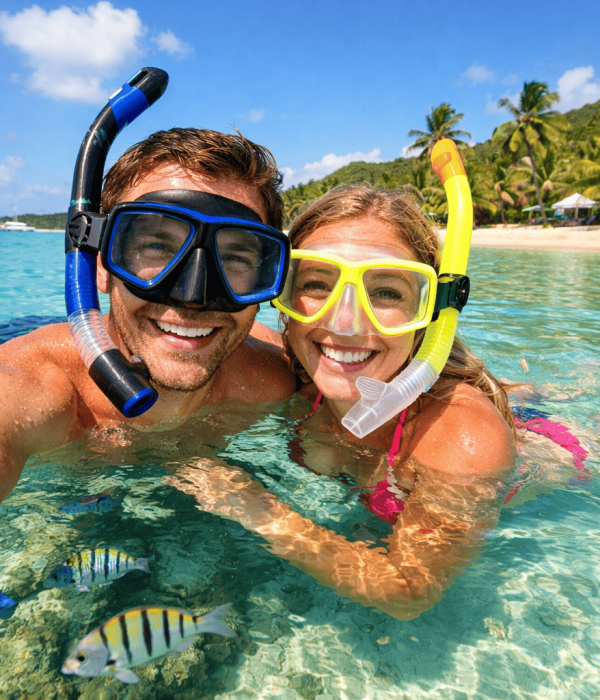
Antigua is famous for its 365 beaches and its warm, inviting ocean waters. It’s no surprise that water-based activities are among the top attractions for both residents and visitors. Sailing, diving, and boating excursions each offer unique experiences, but snorkelling stands out for its accessibility and intimacy with marine life.
Snorkelling allows you to explore the ocean up close without the need for expensive boats or extensive equipment. For beginners, it is one of the easiest ways to witness vibrant marine life firsthand, with minimal training required. While formal instruction isn’t necessary, following good safety practices is essential to ensure a relaxed and enjoyable experience.
For many first-time snorkellers, the idea can feel intimidating — unfamiliar breathing techniques, open water, and uncertain conditions can create hesitation. The truth is that snorkelling is safest and most enjoyable in calm, shallow waters, with proper preparation and realistic expectations.
At LaVista Antigua, our waterfront location within a protected bay in the National Park offers ideal conditions for beginners. Although ocean conditions naturally vary, the waters here are often calm and shallow, making it a perfect place to try snorkelling for the first time.
This guide will walk you through what to expect, the essential preparation, and tips to make your first snorkelling experience safe, relaxing, and unforgettable.
Snorkelling is a surface water activity that allows you to observe marine life while floating or swimming face-down, using a mask and snorkel to breathe. Unlike scuba diving, snorkelling does not involve tanks, regulators, or going deep underwater.
It appeals to beginners because you stay near the surface, can lift your head at any time, and don’t need training or certification.
Only when the conditions and location are right.
Snorkelling is particularly suitable for beginners in calm, shallow water where you can stand if needed and where currents are minimal. Problems usually arise not from snorkelling itself, but from choosing unsuitable locations such as open ocean or rough conditions. Although snorkelling is suitable for beginners, in order to snorkel safely there are some important safety guidance that should be adhered to.
Before you enter the water, it’s important to follow some essential safety guidelines.
Avoid Alcohol or Mind-Altering Substances: Never snorkel under the influence of alcohol or drugs.
Never Snorkel Alone: Beginners should not snorkel alone, but should snorkel with a companion, preferably someone experienced.
Build Water Confidence: Learn to swim and practise in shallow water before venturing into deeper areas.
Invest in Quality Gear: Reliable snorkelling equipment is essential. Learn how to use it properly to avoid issues underwater.
Wait After Eating: Avoid snorkelling immediately after a heavy meal to prevent discomfort.
Stay Hydrated: Drink water or natural juices, and avoid alcohol before snorkelling.
Be Fit and Healthy: Ensure you are physically well to prevent hazards while in the water.
Choose a Safe Spot: Snorkel in calm, designated areas with clear water and minimal currents.
Check Weather Conditions: Only snorkel when the weather is calm and sunny, with no storms or strong winds forecasted.
Protect Your Skin: Wear UV-protective clothing, reef-safe sunscreen, and consider protection against jellyfish stings.
Respect Marine Life: Do not touch corals or marine creatures to protect both yourself and the environment.
Snorkelling is particularly suitable for beginners in calm, shallow waters where you can stand if needed and currents are minimal. Most problems arise not from snorkelling itself, but from choosing unsuitable locations, such as the open ocean or rough waters.
This is where LaVista Antigua comes into its own. Its waterfront location, usually with calm shallow waters enables guests to take their time, and slowly build confidence as they learn.
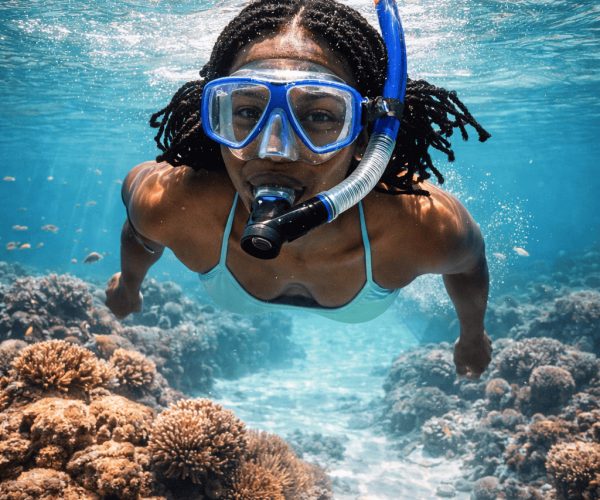
Even in shallow water, correctly fitting equipment is crucial. Simple, well-fitted gear should be enough for our bay.
* Mask: Ensure a tight seal to prevent leaks.
* Snorkel: Practice breathing through it before entering the water.
* Fins (optional): Useful but not essential for calm, shallow water. Most of the snorkellers in our bay don’t use them.
* Water shoes: Protect feet from slippery rocks and uneven surfaces. Some of our swimmers use them to get into the water and then take them off to swim or snorkel. Others snorkel with them on. Horses for courses.
* Safety equipment: Consider a flotation aid if you are unsure of your comfort level.
*A properly fitting mask
*A snorkel
*Optional fins for gentle movement
*Water shoes for rocky or uneven entry points
*Appropriate safety equipment, such as a flotation aid if needed
*Good fitting effective snorkelling gear.
Always check weather and water conditions before entering.
Stay close to shore, remain within your comfort zone, and know where and how you will exit the water.
Never push yourself to continue if conditions or confidence change.
Good snorkelling experiences are calm and controlled, not rushed.
For inexperienced swimmers, the idea of being in open water can feel intimidating. The key is gradual exposure and control. If you have access to a swimming pool, it’s a great place to test your snorkelling gear first.
Start in the shallow end where you can stand comfortably.
Put on your mask and practise breathing through your snorkel until it feels natural.
Try on your fins and get used to moving in the water.
Repeat these steps until you feel confident.
Once you’re comfortable in the pool, you can progress to the ocean.
Begin in shallow water where you can stand.
Put on your mask and remain stationary, either standing or kneeling, with your head in the water to get used to the feeling.
Ensure the mask is secure and breathing through the snorkel feels natural before floating or moving.
Practice slow, steady breathing and relax your body — this reduces anxiety and builds confidence.
If you ever feel uncomfortable, stand up, take a break, and try again.
As confidence grows, you can slowly explore further, staying in shallow, calm waters. At LaVista Antigua, we generally recommend venturing no further than about 30ft from shore for safety.
Start slowly — practice in a pool if possible before entering the ocean.
Choose shallow, calm waters; LaVista Antigua’s bay is ideal, weather permitting.
Practice in one spot until you feel comfortable before exploring.
Move gradually away from your initial spot, always staying in water shallow enough to stand.
A buoyancy aid can help you stay afloat and reduce anxiety.
Take breaks and move at your own pace — there’s no need to push distance.
Be aware of conditions — calm, sunny days with minimal currents are best.
Snorkel with a companion for reassurance and safety.
By approaching the water gradually and practising these techniques, even inexperienced swimmers can relax, build confidence, and safely enjoy snorkelling in the ocean.
As our bay is often calm, when snorkelling in its shallow water it provides a safe and enjoyable environment for inexperienced snorkellers. Proper preparation, careful entry, and mindful observation of marine life will help you gain confidence and make your snorkelling experience a positive one.
Remember, repeated practice in protected bays, such as our waterfront builds the skills and confidence needed to be able to explore more adventurous snorkelling locations in the future.