

Antigua is a year round destination with consistent sunshine and warm temperatures. The busiest period runs from November to May, coinciding with winter holidays and regatta season, when accommodation and flight prices are higher. The off-season (May–November) offers quieter beaches, lower prices, and a slower pace, though some restaurants and small hotels close while owners take their own breaks. The Atlantic hurricane season officially runs June to November. While Antigua is often less impacted than more westerly Caribbean islands, storms can still occur, as seen recently with Hurricane Melissa, which reminded travelers of the need for flexible plans and travel insurance. However such storms especially those as impactful as Melissa are rare. If you enjoy culture and sailing, winter is ideal. Events like Antigua Sailing Week and the RORC Caribbean 600 fill English Harbour with yachts and lively gatherings.
Antigua’s V.C. Bird International Airport (ANU) is the island’s main gateway and a regional hub for the Eastern Caribbean. Direct flights arrive daily from the UK, USA, Canada, and Europe, with regional connections to nearby islands like St. Lucia, Guadeloupe, and Dominica. Most visitors don’t need a visa for short stays. Passports must have at least six months’ validity on arrival, and an onward or return ticket is required. Antigua has also recently introduced an online entry system, accessible here: https://immigration.gov.ag/visa-services/visa-application-process/forms-2/
Taxis are the most convenient way to reach your accommodation from V.C. Bird International Airport. After clearing customs, exit the terminal and walk across the pedestrian crossing to the official taxi desk. Tell the dispatcher your destination and they’ll issue a printed fare slip. Expect fares around US $30–40 to English Harbour or Jolly Harbour. Most drivers accept cash only. Drivers are friendly, knowledgeable, and often share helpful local tips along the way. For efficiency, some rides may be shared with travellers headed in the same direction.
Antigua is small and easy to navigate, measuring roughly 13 miles across. Car rental offers the greatest freedom and is available at the airport and major resorts. To drive, visitors need a temporary local driving permit, which can be arranged by rental agencies or police stations for about US $20 (EC $50). Cars drive on the left, and most rentals are automatic. An SUV is recommended for reaching off-the-beaten-path beaches, as some roads are uneven. Local buses provide an authentic experience for short trips, but services taper off at night and on weekends.

Driving in Antigua gives visitors the independence to explore beaches, viewpoints, and small local eateries. The island drives on the left-hand side, and roads are generally good near main towns but can be rough elsewhere. Take your time and enjoy the scenery. Keep an eye on fuel levels, as some gas stations close early or shut on weekends. A small power bank and paper map are handy backups in case of GPS dropouts.
Most properties in Antigua operate on 110 V electricity using American-style 2 or 3 pin plugs. Some properties have 220 V systems or dual setups, so it’s best to check with your accommodation before traveling.
Power outages are infrequent but can occur during storms. Keeping a small power bank for devices is recommended. Most hotels and villas have backup generators or battery systems, so interruptions are usually brief.
Antigua’s accommodation scene centres around three main hubs:
English Harbour, The island’s sailing capital, home to historic Nelson’s Dockyard (a UNESCO World Heritage Site), numerous regattas, and the famous Shirley Heights Sunday sunset party.
Dickenson Bay,, Near St. John’s and the airport, this area features major all-inclusive resorts like Sandals and Royalton. Its calm waters and proximity to town make it popular with short-stay visitors and cruise passengers.
Jolly Harbour, A gated marina community with villas, restaurants, bars, and a large supermarket. It has a lively expat scene and great access to the west coast’s beaches.
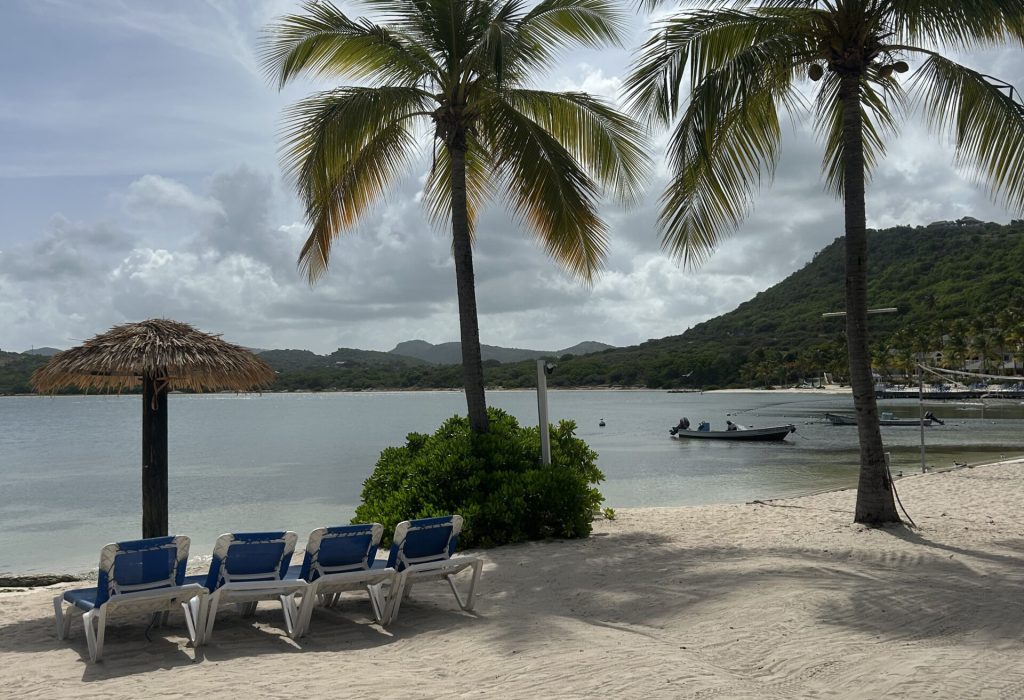
Antigua is said to have 365 beaches, one for every day of the year. Each has its own unique charm, shaped by its location, water conditions, and the rhythm of local life. Some are tucked beside villages or hotels and attract a lively crowd, while others remain peaceful stretches of sand for quiet escapes.
Dickenson Bay. A postcard-perfect beach ideal for swimming and sunbathing. It’s a popular departure point for boat tours and jet ski rides, with calm waters and plenty of activity nearby.
Pigeon Point. Found in English Harbour, this sheltered cove offers shallow waters perfect for families. Visiting yachts anchor just offshore, creating a stunning backdrop for an afternoon swim. Close to the marinas, it’s a social spot with a relaxed local vibe.
Half Moon Bay. Wild, scenic, and beautifully untamed. Its turquoise surf and rolling waves make it perfect for those who enjoy a more invigorating dip.
Darkwood Beach & Ffryes Bay. Located along the west coast, these two favourites deliver classic Caribbean beauty — golden sands, gentle surf, and unforgettable sunset views.
Wherever you go, you’ll find soft white sand, crystal-clear water, and a welcome as warm as the sunshine.
The local currency is the Eastern Caribbean Dollar (EC$), fixed at EC $2.70 = US $1. US dollars are accepted almost everywhere. ATMs are widely available in St. John’s, Jolly Harbour, and English Harbour. Credit cards are accepted at most hotels and restaurants, but small vendors and taxis usually prefer cash. Tipping is standard at 10–15% unless a service charge is already included. Banks typically close early, around 2 p.m. (Fridays 3 p.m.) and do not open on weekends.
Antigua enjoys a tropical maritime climate with warm temperatures averaging 26–30 °C (79–86 °F) all year. The dry season (December–April) brings sunshine and cooling trade winds, perfect for sailing and beach days. The rainy season (May–November) is lush but still warm, with brief afternoon showers rather than long downpours. Compared to other Caribbean islands, Antigua experiences less rainfall overall, and hurricanes remain rare, though the season officially spans June to November.